Process
Research
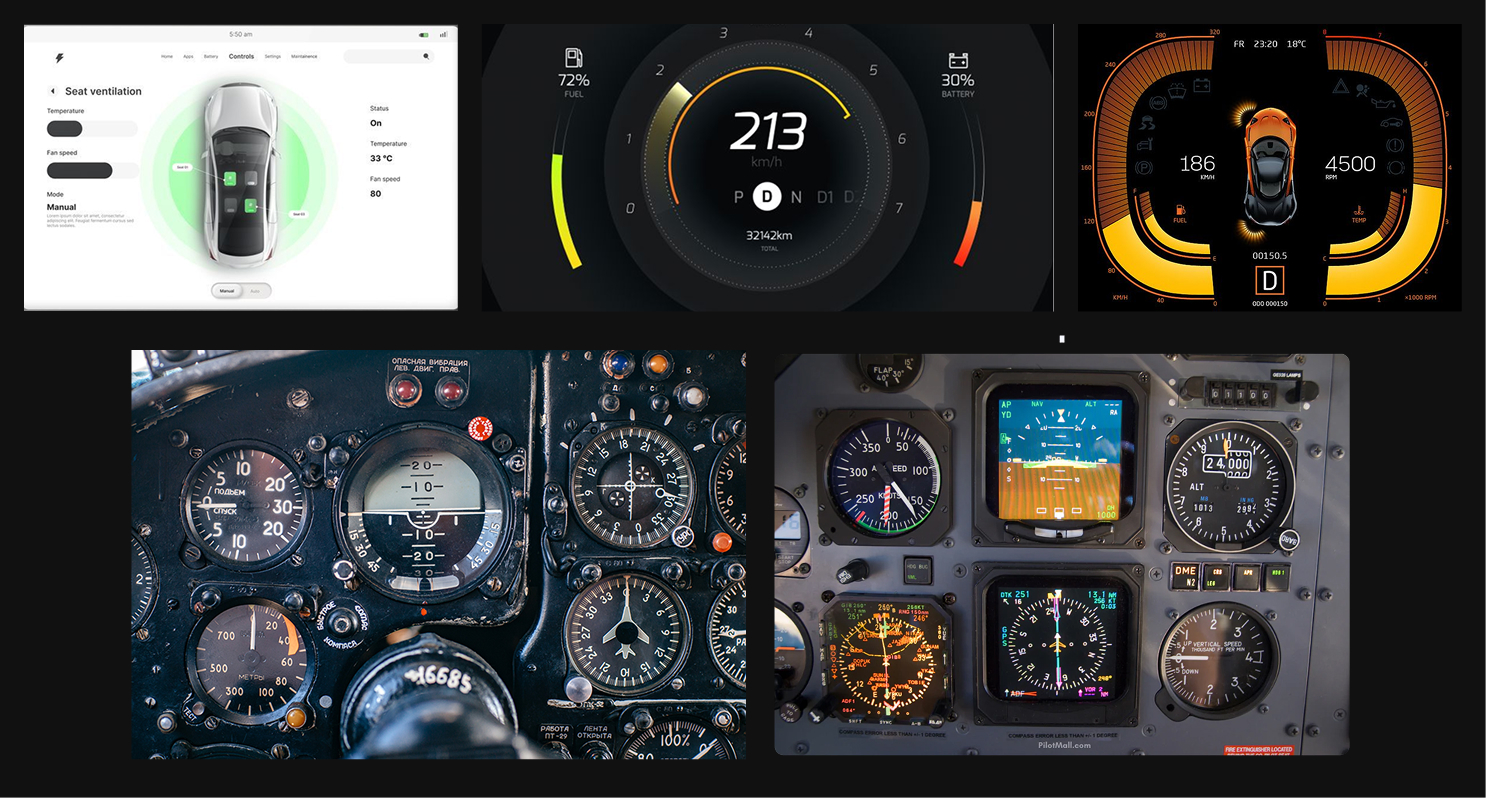
To ground the design in familiar interaction patterns, I drew inspiration both from automotive and aircraft dashboard systems, focusing on how they communicate complex real-time data at a glance.
Particular attention was given to pitch, roll, and trim visualization, as the hydroplaning boat needs instruments to visualize this that are not present in standard boat dashboard. Another challenge was achieving great contrast, color balance, and typographic scale for sunlight readability.
Prototyping and iteration
Over the course of the project, I developed and refined multiple interactive prototypes, testing different data layouts, animation speeds, and interaction patterns.
Each iteration was reviewed together with the ENVGO team, who quickly identified new needs and opportunities as they saw the interface come to life.
This close feedback loop allowed the design to evolve rapidly — aligning the visual and functional layers of the UI with the realities of their hardware and use environment.
UI components
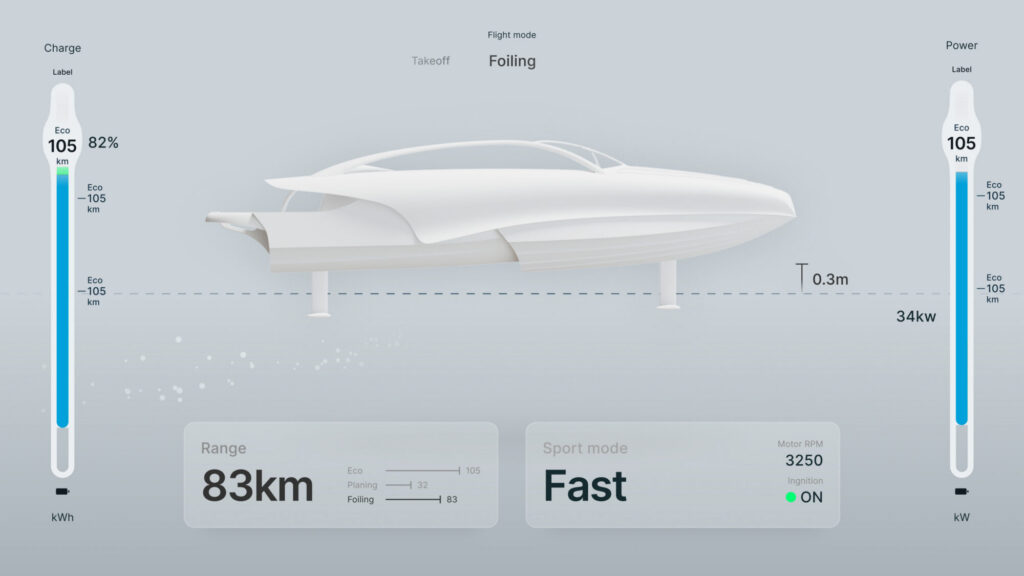
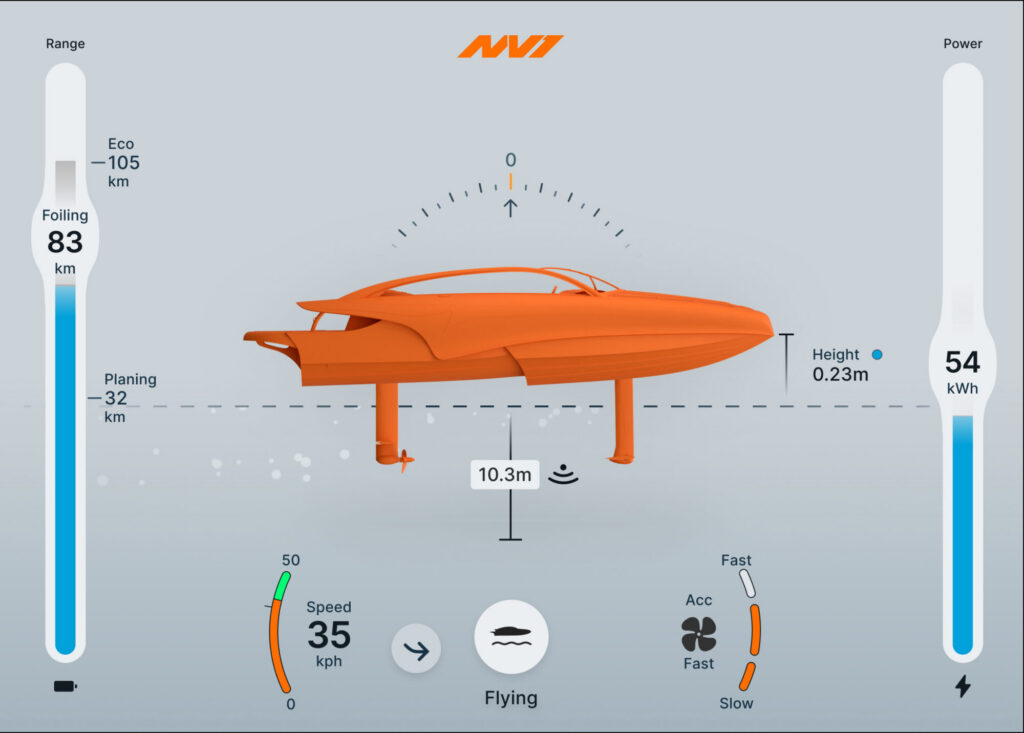
The interface was built to handle dozens of live metrics without visual overload.
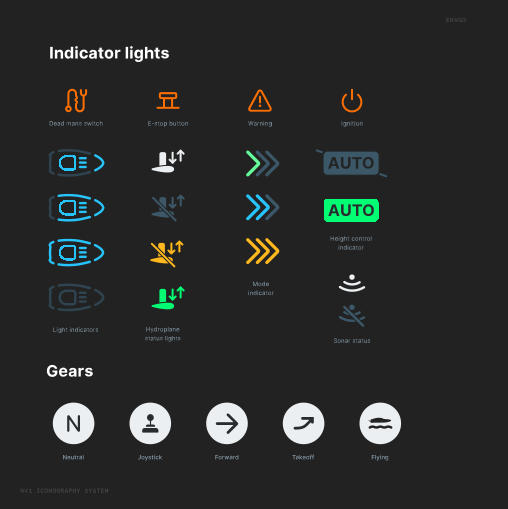
The key to achieving this was to stay away from typography at every opportunity, and instead rely on iconography and animation to convey information at a glance.
This approach meant that a library of bespoke components and icons were needed to cater to the unique needs of the ui.
The final prototype placed the speed dial front and center, together with clear indication of the speeds needed to enter the different modes (planing, takeoff, foiling). Iconography, colors and typography were all refined to increase legibility in outdoor conditions, and make the display glanceable, while still being information dense. The overall aesthetic was made to match the style of the boat and the direction the team wanted to take the branding.
Outcome
Throughout the design process, the design drafts were placed directly on the physical dashboard of ENVGO’s prototype boat. At the end, the final design performed very well both in the dry prototype as well as on the water. This real-world validation confirmed both the legibility and intuitive feel of the interface — even under rapid movement and changing light conditions.
“You’ve been a pleasure to work with, and the results look great.”
— Mike Peasegood, CEO, ENVGO
“We just had our final design sync this morning and we are super happy with how this project unfolded. Thanks so much Paul, it was great working with you.”
— April Blaylock, Project Lead, ENVGO